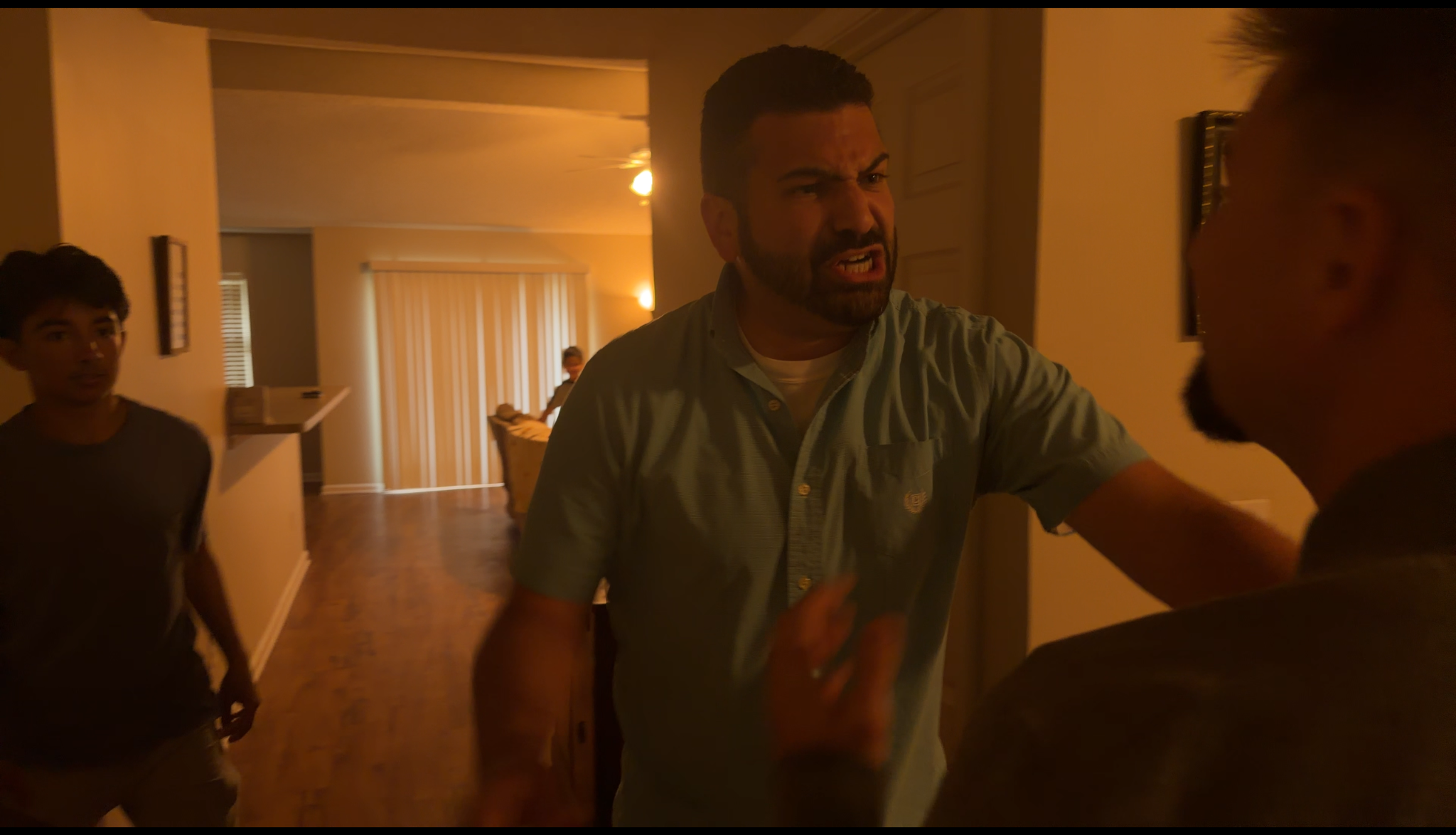
He wished for a life with nothing holding him back.
After losing his job, Jack Bellinger wants a life with fewer demands. Then the familiar pieces of that life begin to vanish: possessions go missing, people stop recognizing him, and places he knows no longer feel like his own.
Over three days, an ordinary husband’s wish for freedom becomes a psychological thriller about identity, connection, and the cost of having nothing holding you back.
The film is in its final stretch of post-production, with an original song written for the ending.
Jack has a wife, friends, a home, and the everyday routines that connect him to other people. After losing his job, those connections begin to feel like demands.
The kitchen table, the gym, and the things around the house establish a life that is ordinary, imperfect, and unmistakably his. Before anything disappears, we see what Jack has stopped appreciating.
DAY TWO / THE FIRST ABSENCES
The same places. A stranger in them.
Small details stop adding up. A phone wallpaper has changed. His game console is gone. People Jack knows no longer recognize him.
As familiar routines break down, the loss becomes more than a missing possession. Jack is losing his place in other people’s lives. The world still looks familiar; his place in it no longer feels certain.
DAY THREE / NOTHING HOLDING HIM BACK
How much can disappear before a life is gone?
The losses reach the foundations of Jack’s life: the people he loves, the home he belongs to, and the things he thought he could rely on.
What began as a wish to escape responsibility has become a struggle to hold on to anything at all. The final day brings the film’s central question into focus: what is freedom worth without anyone or anything to share it with?
THE DIRECTOR’S INTERVIEWCHARLIE FRANKLIN / FREEDOM ST.
IN CONVERSATION.
On psychological stories, a three-day cycle, and making a first short film.
01
Where did the idea for Freedom St. come from?
I’ve always loved psychological films and unusual, Twilight Zone-style scenarios. I started thinking about a common human longing—freedom—and wanted to explore what would happen if I pushed that idea to its limit.
The first draft of the script came together in just two days.
02
What does Jack misunderstand about freedom?
To me, Jack sees freedom as the complete removal of attachments. He ultimately gets his version of freedom, but in a twisted form.
03
What inspired the three-day structure?
Honestly, I’m a massive Zelda fan. The three-day cycle in The Legend of Zelda: Majora’s Mask inspired me to create a similar structure, but explore a completely different subject.
04
Which scene was your favorite to film?
The beginning of Day Three. We put a lot of effort into getting the lighting and camera angles right, and for me it was completely worth it. I think you can see that work in the film. It was definitely my favorite scene to shoot.
05
What were the biggest challenges of making the film?
Editing consistently and getting the lighting right were the biggest challenges. Some scenes needed additional work in post-production to achieve the lighting I wanted. Those are lessons I can carry into my next productions.
06
What did Zayne Worley bring to the role of Jack?
Zayne contributed so much to Jack on set. You can tell how passionate he is about acting. The small mannerisms that make up the character came from him.
There’s only so much I can do on the page. Seeing an actor bring something to life that I’d only seen in my head—and make it better than I’d imagined—was incredible.
07
What did you discover while editing?
You can shoot a lot of angles and still wish you’d shot more.
08
What do you hope stays with someone after watching?
“Be careful what you wish for” might sound like a cliché, but I think we all have dreams that, if they became real, we might come to regret.
I hope people come away appreciating what they have, especially the relationships in their lives right now, rather than always wishing for something in the future.
THE STORY BEHIND THE STORY
FROM PAGE TO PICTURE.
Follow the script, shoots, rough cuts, and small decisions that brought Freedom St. this far.